> For the complete documentation index, see [llms.txt](https://wiki.redmodding.org/cyberpunk-2077-modding/llms.txt). Markdown versions of documentation pages are available by appending `.md` to page URLs; this page is available as [Markdown](https://wiki.redmodding.org/cyberpunk-2077-modding/modding-guides/vehicles/boe6s-guide-new-car-from-a-to-z/make-the-proxymesh.md).
# Boe6's vehicles: Make the Proxymesh
The proxy mesh can be created once the vehicle's exterior is complete or close to complete.
There are many ways of converting a high-res model to a low-res model, but for this guide the “**Remesh**” modifier in **Blender** will be used.
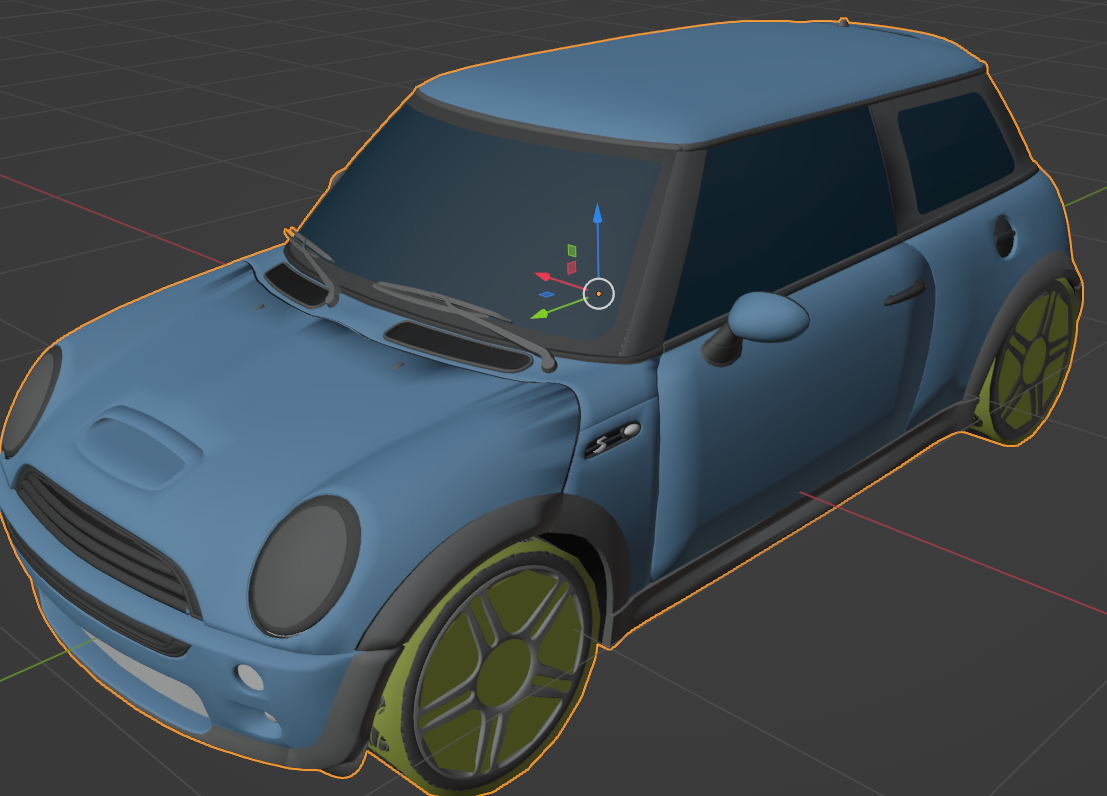
Set all the parts visible and positioned correctly relative to the body in **Blender**. In my case I also added the wheel shadow meshes, as the rim holes caused issues with remeshing details. Join all the objects into one and select the object.\
Example:
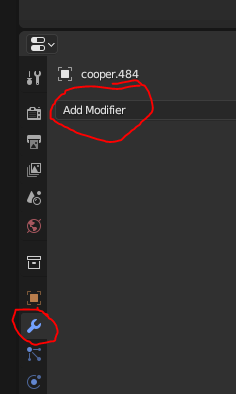
The **Remesh Modifier** is available in the properties menu, under modifier properties: It
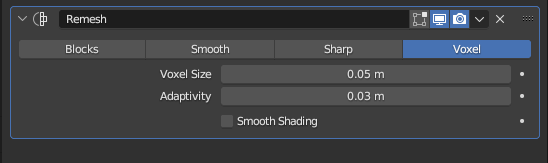
It is recommended to save before adding or changing settings in the modifier, as unintended settings can crash **blender** fairly easily. Here are the settings to adjust in **Remesh**:
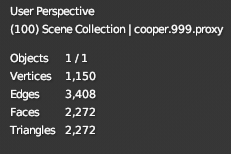
Try to create a final proxy mesh with a low amount of faces/triangles. The face current face count visible in **blender** can be seen in the top left of the viewer.\
Example:
Most use less than 2 thousand faces for a proxy mesh. You’ll also need to update the **blender** model to be correctly position, as the `.rig` will modify it. Translate your model with the reverse values used to translate the initial proxy mesh.
Once the mesh is ready, a texture is needed. I recommend this guide for texture painting:
{% embed url="" %}
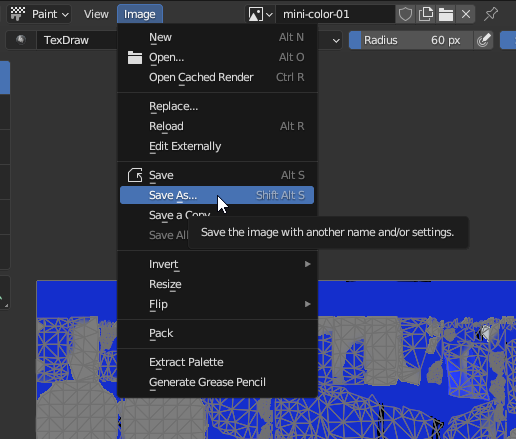
Once the texture is ready, you can export it from **Blender** under `Image > Save As.. >`
Save it as a `.png`, and then import it into the project as an `.xbm`
In the `proxy.mesh`, update the texture path:
* `.mesh > RDTDataViewModel > preloadLocalMaterialInstances > 0 values > baseColor`
---
# Agent Instructions
This documentation is published with GitBook. GitBook is the documentation platform designed so that both humans and AI agents can read, navigate, and reason over technical content effectively. Learn more at gitbook.com.
## Querying This Documentation
If you need additional information that is not directly available in this page, you can query the documentation by asking a question.
Perform an HTTP GET request on the following URL with the `ask` and `goal` query parameters:
```
GET https://wiki.redmodding.org/cyberpunk-2077-modding/modding-guides/vehicles/boe6s-guide-new-car-from-a-to-z/make-the-proxymesh.md?ask=&goal=
```
`ask` is the immediate question: it should be specific, self-contained, and written in natural language.
`goal` is what the user is ultimately trying to achieve, the reason they need the answer. Sharing it helps GitBook give you a better, more relevant answer. A goal is most helpful when it describes the outcome the user wants rather than restating the question. For example, with `ask=how do I create an API token`, a goal like `automate deployments from our CI pipeline` lets GitBook tailor the answer to that use case.
The response will contain a direct answer to the question and relevant excerpts and sources from the documentation.
Use this mechanism when the answer is not explicitly present in the current page, you need clarification or additional context, or you want to retrieve related documentation sections.