This page contains the theory section for textures in Cyberpunk. It will give you an overview about different kinds of texture, and what the game is using them for.
You can't use textures in Cyberpunk without first converting them to .xbm. To learn more about the reasons, check Textures: .xbm files.
By default, all textures in Cyberpunk2077 are Y-flipped (upside down). WolvenKit will take care of that for you during import/export via the VFlip property.
Texture naming conventions
If you stick to CDPR's naming convention, Wolvenkit can automatically pick the right import settings for you!
Across the game files, textures are clearly marked via suffix. If there are multiple textures with the same suffix, they will just be numbered.
In the game files, these files will be named <name>_r.xbm (e.g. base\environment\decoration\food\packaged_food\textures\synthetic_snack_01_r.xbm)
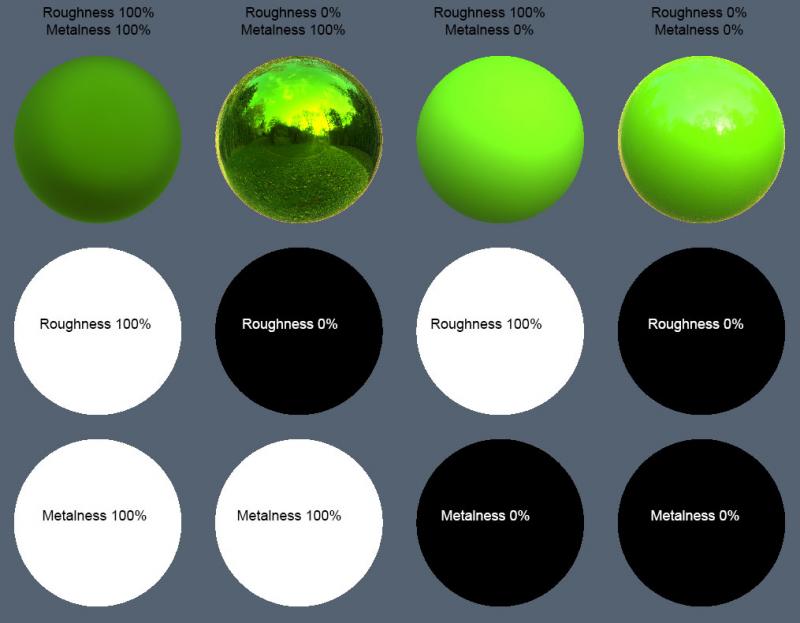
Metalness
Also known as "metallic map", this texture defines which parts of the material behave like metal and which parts don't. Used by shaders like metal_base.remt.
In the game files, these files will be named <name>_m.xbm (e.g. base\envment\decoration\food\packaged_food\textures\synthetic_snack_01_m.xbm)
Combined Roughness/Metalness
Some shaders use a combi-texture for roughness and metalness.
Since by default, roughness and metalness are inverted (white in one is black in the other), you can only use this for shaders that expect such a texture.
Naming convention:
In the game files, these files will be named my_texture_rm.xbm
Atlas
Used for in-game items and UI elements, these textures contain a collection of images. They are made available to the game via inkatlas files.
Naming convention:
In the game files, these files will be named atlas_<name>.xbm (e.g. base\gameplay\gui\fullscreen\hacking_minigame\atlas_minigame_programs.xbm)